What to Expect During a Radiant Pool Installation in New Hampshire and Massachusetts
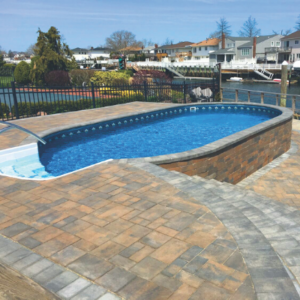
Radiant Pool installation in New Hampshire by E-Z Test Pool Supplies

Radiant Pools at E-Z Test Pool Supplies

If you are considering a Radiant Pool for your backyard, understanding the installation process is an important first step. At E-Z Test Pool Supplies, we help homeowners across Southern New Hampshire and Massachusetts find pool solutions that offer versatility, strength, and long-term value. With locations in Plaistow, NH, Derry, NH, and North Reading, MA, our team works with customers throughout the region who want a durable pool that can adapt to a variety of backyard conditions.

One of the biggest advantages of a Radiant Pool is its flexibility. Radiant’s Metric Series can be installed above-ground, semi-inground, or fully inground, making it a strong option for yards with slopes, elevation changes, or other site challenges. Radiant Pools are also built with 2-inch thick R-10 insulated wall panels made from an EPS foam core bonded between sheets of acrylic-coated aluminum.

That combination of installation flexibility and insulated wall construction makes Radiant Pools a smart fit for many New England backyards, where drainage, ledge, elevation, and seasonal ground conditions often come into play. Here is a closer look at what homeowners can expect during a Radiant Pool installation.
1. Excavation Starts the Process

For a semi-inground or fully inground Radiant Pool, the installation process begins with excavation. The site is prepared by digging out the area where the pool will be placed.

Because every yard is different, excavation can uncover conditions that affect the installation plan, including groundwater, rocky soil, ledge, slope, and limited access. In New Hampshire and Massachusetts, these are common site considerations, especially in wooded areas, older neighborhoods, and properties with uneven terrain.

A properly planned excavation creates the foundation for everything that follows. Solid site preparation is one of the most important steps in helping a Radiant Pool perform the way it should for years to come.

2. Groundwater and Drainage Must Be Controlled

One of the most important parts of any inground-style pool installation is managing groundwater. During excavation, water may begin entering the hole, especially in lower parts of the yard or in deeper sections of the dig.

When groundwater is present, installers often remove unsuitable material and replace it with a base of 3/4-inch stone. This helps create a more stable foundation while also improving drainage beneath the pool. In many cases, an underdrain system, sometimes called a French drain, is also installed to help move water away from the pool area.

Controlling groundwater is critical to a successful installation. Proper drainage helps protect the pool structure, maintain stability, and reduce future problems caused by excess moisture around the installation site.

3. Extra Excavated Material May Need to Be Removed

As the pool site is dug, there is often more excavated material than the yard can absorb or reuse. In some cases, the fill can be spread elsewhere on the property. In others, it needs to be hauled away from the site.

This is especially common on tighter residential lots where there is limited room to stockpile or redistribute soil. Installers may use dump trucks to remove the material in stages as the project moves forward.

It is also important to use the right material around the pool once installation begins. Organic topsoil or loam should not be used near the immediate pool structure because it can absorb water, shift during freeze-thaw cycles, and contribute to movement over time. In the New England climate, stable materials and proper drainage are especially important.

4. Ledge and Large Rock Can Change the Job

In many parts of Massachusetts and New Hampshire, it is not unusual to encounter ledge or large buried rocks during excavation. These conditions can affect the timeline, the equipment needed, and the overall installation approach.

Depending on the severity, crews may use heavy equipment such as a hydraulic hammer to break through rock. In more difficult situations, a specialized contractor may be required to help remove ledge and allow the installation to continue.

This is one reason local site knowledge matters. A backyard may appear simple on the surface, but conditions below ground can quickly change the scope of the project once excavation begins.

5. Backfill Material Matters With Radiant Pools

Once the Radiant Pool structure is in place, the area around it must be backfilled correctly. Not all excavated soil is suitable for this purpose.

For semi-inground and fully inground installations, builders often use selected materials such as bank sand or septic sand to create a more stable and workable backfill around the pool and plumbing. The goal is to support the structure, protect the plumbing, and reduce the chance of future settling.

Proper backfill plays a major role in the long-term success of the installation. It helps support the pool wall system while also protecting important components around the structure.

6. Pool Height and Grade Are Critical

A pool must be installed level, but most backyards are not naturally level. That means the height and grade of the finished pool must be carefully planned from the beginning.

This affects more than just appearance. The final elevation can determine whether the project may need retaining walls, added drainage solutions, grading changes, or adjustments to nearby patio and deck plans.

The pool should never be positioned in a way that traps runoff or causes it to act like a dam. Instead, water should be directed safely around the pool area. This is especially important in New England, where snow melt, heavy spring rain, and freeze-thaw cycles can place added pressure on drainage and grading.

Speak with an expert

Contact us to speak with one of our Hot Tub & Spa Experts

"*" indicates required fields

This field is for validation purposes and should be left unchanged.
Name*
Email Opt-in

Why Radiant Pools Are Different

Radiant says its pools are the only structurally insulated swimming pools manufactured using an R-10 insulated panel, and the company highlights benefits such as energy savings, installation versatility, and strong wall construction. The manufacturer also states that Radiant Pools come with a full lifetime warranty that is fully transferable.

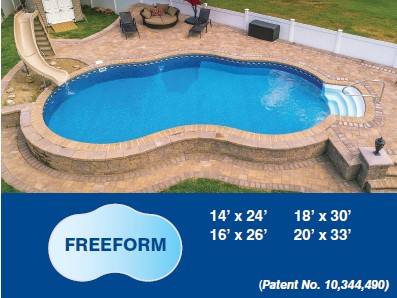
For homeowners, that means Radiant Pools offer something different from a standard above-ground pool. They are designed for more installation options and can be a smart fit for backyards where a traditional pool design may not be ideal. Radiant’s inground line also emphasizes customizable shapes and features such as benches, steps, sundecks, and more.

Radiant Pool Installation in Plaistow, Derry, North Reading, and Beyond

At E-Z Test Pool Supplies, customers can explore Radiant Pools through locations in Plaistow, NH, Derry, NH, and North Reading, MA. E-Z Test’s website specifically lists Radiant Pools among the specialties at those locations, making the company a strong local resource for homeowners comparing installation options in the region.

If you are searching for:

  • Radiant Pools in New Hampshire

  • Radiant Pools in Massachusetts

  • semi-inground pool installation near me

  • Radiant Pool dealer in Plaistow, Derry, or North Reading

this is the type of project where local guidance can make a major difference.

Start Planning Your Radiant Pool With E-Z Test Pool Supplies

Every yard is different. Groundwater, slope, rock, access, and drainage all affect how a pool project should be planned. That is why it helps to work with a team that understands both the product and the local conditions.

If you are thinking about a Radiant Pool installation in NH or MA, E-Z Test Pool Supplies can help you explore your options and better understand what your backyard may require before the project begins.


Visit E-Z Test Pool Supplies in Plaistow, Derry, or North Reading to learn more about Radiant Pools and start planning your backyard project.


As always, Radiant Pools are 100% American made!

Explore our radiant above ground pool models & pricing

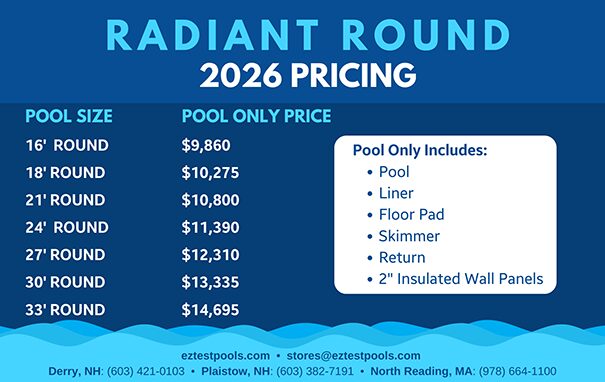
Radiant Round Pool Pricing 2026
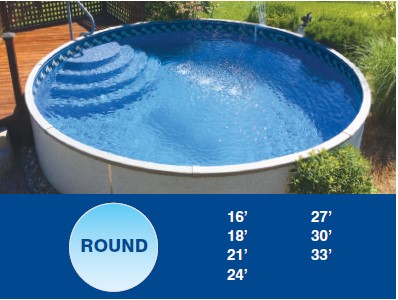
Round Radiant Above Ground Pool
Round Shape icon

16′
18′
21′
24′
27′
30′
33′

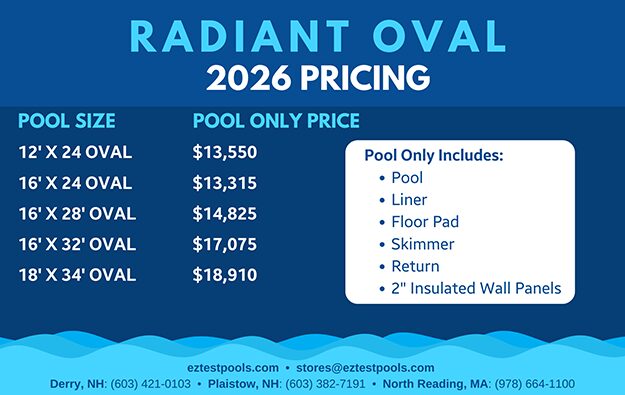
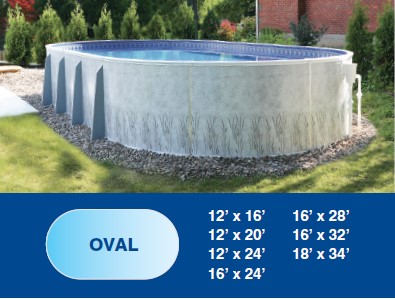
Radiant Oval Pool Pricing 2026
Oval Radiant Above Ground Pool
Oval Pool Shape

12′ x 26′
12′ 20
12′ x 24′
16′ x 24′
16′ x 28′
16′ x 32′
18′ x 24′

Can a Radiant Pool be installed fully inground?

Yes. Radiant Pools can be installed above-ground, semi-inground, or fully inground, giving homeowners more flexibility based on their yard and project goals. :contentReference[oaicite:5]{index=5}

Radiant Pools stand out for their insulated wall design, installation flexibility, and long-term durability. Radiant also highlights its true lifetime warranty and customizable pool options. :contentReference[oaicite:6]{index=6}

Drainage helps protect the pool from groundwater pressure and runoff. Radiant recommends proper water management around semi-inground and fully inground pools to help prevent damage and support a successful installation. :contentReference[oaicite:7]{index=7}

They can be. Because Radiant Pools can be installed in several ways, they are often a good fit for yards with slope, elevation changes, and other layout challenges.

Backfill and grading help keep the pool supported, level, and protected from water issues. Proper planning helps direct water away from the pool and supports long-term performance.

Scroll to Top